
Sylvester Court Docket Searches
Read the paper first. A citation or notice tells you the issuing agency, the law cited, the court name, the case number, and any response date. Those clues route a search better than a Sylvester address ever will. The town's official pages name local officials. They list no municipal judge and no case-search URL. For state-law matters, Boone Magistrate Court sits within its own jurisdiction. Boone Circuit Court, meanwhile, is the general-jurisdiction trial court for the county.
- Read the issuing agency, law, number, and response date.
- For a Sylvester ordinance matter, call Town Hall and request the municipal records custodian.
- For a state-code magistrate case, search Magistrate Case Record Search, or MCR.
- For public circuit civil or criminal information, search WVPASS under Boone County.
- Confirm the latest setting, location, and payment method with the responsible clerk.
Searching by name alone can pull up several people. Sort them out by county, court level, case type, filing date, and case number. Remember that MCR shows case data, not document images. WVPASS reaches public circuit civil and criminal information back to 1999, though sealed and juvenile records stay off limits.
Sylvester History Is Not a Docket
Sylvester sits fourth among Boone County's incorporated places. It shows 171 residents in the 2020 Census table. The town's own page dates its incorporation to April 11, 1952. That history makes Sylvester a records hub, but not one records counter. Boone Circuit Court sits at 200 State Street. Family Court sits at 206 Court Street, and Sylvester Town Hall at 32832 Coal River Road. Each address serves a different purpose. The official Sylvester municipal page shows the town source worth checking for local routing.
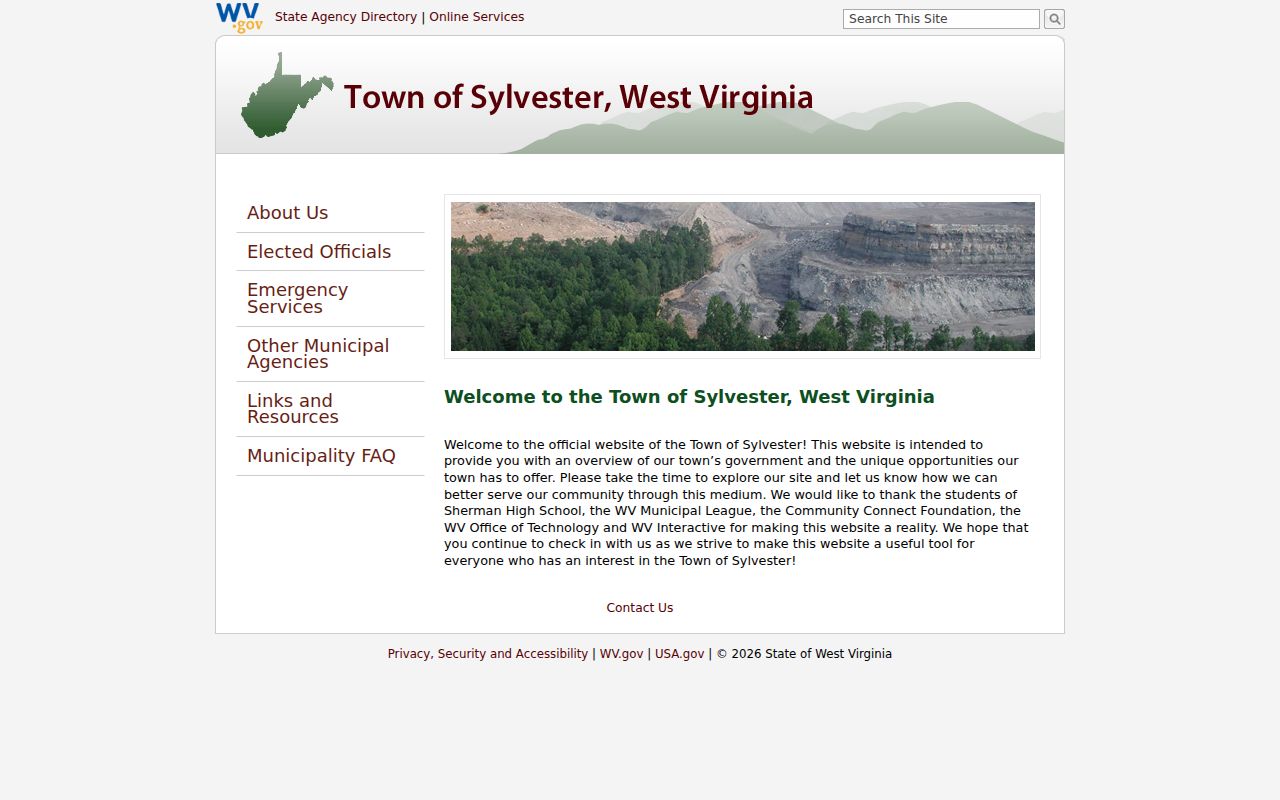
The incorporation reference to Circuit Court is pure history. It does not mean current town cases appear in the circuit docket. Whatever you need, whether circuit, family, magistrate, county recording, or city ordinance records, use the exact office and suite the holding office gives you.
Inside the Sylvester Municipal Court
West Virginia Code Chapter 8 lets a municipality create a court by ordinance. Sylvester publishes no municipal judge, no court calendar, and no payment portal. There is no docket calendar, public lookup, or payment interface posted either. That silence proves nothing. Municipal records may still exist. So ask Town Hall who keeps them and whether you can inspect them, get copies by mail, or use another delivery option.
Municipal jurisdiction never replaces Boone Magistrate Court, Circuit Court, or Family Court. A police department name alone may not settle the question. Ask whether the charge comes from a Sylvester ordinance or the West Virginia Code. The court printed on your notice is still the best guide.
Requesting Sylvester Municipal Records
Town of Sylvester
32832 Coal River Road
Sylvester, WV 25193
Phone: 304-854-1930
Fax: 304-854-2919
Mail: PO Box 10
Say up front whether you want a municipal ordinance matter or a court record. Include a case or ordinance number if you have one. Add a tight date range and the record type. Then ask for the municipal clerk, recorder, or judge's records contact. Ask about the copy charge, accepted payment, and delivery options. Hold off on faxing identification or sending money. Wait until the office confirms what it currently requires.
An officials directory routes calls; it is not a case index. It cannot tie any official or private person to a proceeding. Use the public names only to reach the right office.
Sylvester's Population Labels Differ
Numbers tell two stories here. The 2020 Census incorporated-place table counts 171 residents. It ranks Sylvester fourth among Boone County's four incorporated municipalities. The town's official history page, by contrast, offers a local population estimate of 293. The labels and sources differ. Use 171 for the ranked comparison, and treat 293 only as the local page's estimate. Neither figure says anything about municipal caseload or how many records the town keeps.
The same care applies to the incorporation story. The official local page says the town was incorporated on April 11, 1952 by Circuit Court. That is history. It is not proof that today's ordinance matters are filed in or searchable through Boone Circuit Court. The record route turns on the law cited and the office that created the file. Call Town Hall for local records. Use MCR for public Boone magistrate data, and WVPASS for public circuit civil or criminal information.
Finding Sylvester Court Dates
A docket setting is just a scheduled event. It is not a trial result or a final outcome. Sylvester posts no municipal calendar. Confirm any town setting directly with the office. For Boone state cases, check MCR or WVPASS. Then call the right clerk when an appearance hangs on the answer. Later orders, continuances, and weather closures can all change an earlier entry.
| Date | The scheduled day, subject to a later order. |
|---|---|
| Time | The docket-call or individual time; ask about check-in. |
| Courtroom | The listed room or location for that court level. |
| Judge | The judicial officer assigned when publicly shown. |
| Setting Type | An appearance, arraignment, pretrial, hearing, trial, or review. |
Keep the case number handy and ask which entry is operative. A reset may show up as a later event while the original setting stays visible on the docket.
Sylvester Town Hall Routing
The Boone Circuit Clerk, at 200 State Street, Suite 202, keeps circuit and family court filings, docket entries, orders, and judgments. The listed telephone is 304-369-7320. Family Court, at 206 Court Street, answers at 304-369-7847. The magistrate clerk's number is 304-369-7366.
Down the hall in Suite 104, the Boone County Clerk handles deeds, liens, probate, vital certificates, commission materials, and recorded judgments. A recorded judgment is not the underlying court file. Town Hall is a separate route yet again. Name the category you need before asking anyone to transfer you.
Sylvester Traffic Ticket Lookups
Where a Sylvester traffic ticket lands depends on which law the officer cited. Write someone up under a town ordinance and the matter runs through the municipal route. Cite state traffic law instead, and the case usually proceeds in Boone Magistrate Court. It can surface in MCR or in the Magistrate Court Online Payment System, known as MFP. One caution applies here. MFP moves money; it does not carry the full docket detail. Neither system is a Sylvester municipal portal. Watch the response date on the citation. Paying can count as a plea, and some matters demand an appearance. Before you send anything, confirm jurisdiction, eligibility, the amount, and the accepted method. Then keep proof of payment or mailing. The Boone County traffic court page walks through the county-wide route.
Two Sylvester Population Figures
Reading a Sylvester docket gets easier once you know what each piece means. The case number names the file. An event notes activity, a setting schedules something, and a disposition records the outcome. A charge is only an allegation, never a conviction. A hearing listed on the docket does not prove it happened. A displayed balance may lag behind a later payment.
- Case number
- The court-assigned file identifier.
- Party role
- A procedural position such as plaintiff, defendant, or respondent.
- Event
- A filing, order, notice, hearing, or other docket activity.
- Disposition
- The recorded resolution at that court level.
One gap worth knowing: MCR shows no document images. If a docket entry names a filing you need, ask the clerk whether a public copy exists and what the charge is.
How Sylvester Cases Reach the County
A Sylvester case can start small and climb. The municipal court handles matters inside city jurisdiction. State-law misdemeanors and preliminary felony proceedings generally begin in magistrate court. Circuit Court takes general-jurisdiction civil work and serious criminal charges. Family Court covers its assigned domestic cases. Appeals and later proceedings can spawn separate docket entries and case numbers down the line.
Docket flow: Sylvester Municipal Court › Boone Magistrate Court › Boone Circuit Court
Treat that as a routing sketch, not a promise that every case visits each level. Search the court named on the most recent notice, and let the Boone County court docket page supply the county-level walkthrough.
Sylvester Records Across Three Systems
Three state systems carry most of what a Sylvester searcher needs. WVPASS, the West Virginia Public Access to State court System, opens public circuit civil and criminal information for all counties back to 1999. Both registration and searching are free. Downloads of public documents can carry per-page and card-processing charges. CourtPLUS E-File is different. It is a filing system, not a free public lookup. For magistrate case data, MCR is the public route. It shows case, party, charge, event, disposition, and payment-related fields, though never document images. A blank result in either system says nothing about whether a separate municipal file exists.
Who Can See Sylvester Court Records
Judiciary access rules govern who sees court records. For municipal administrative records, requests run through West Virginia's Freedom of Information Act instead. Juvenile matters, sealed files, and sensitive identifiers can be restricted or redacted. Copying costs come from the clerk who holds the file. Confirm the schedule there.
Key Rules:
West Virginia Trial Court Rule 10 - governs public court-record access, privacy, and copying.
West Virginia Code § 29B-1-3 - establishes a request process for nonexempt public records.
West Virginia Code § 8-10-1 - addresses municipal courts created by ordinance.
Name what you want when you call. A docket sheet, a specific filing, an order, or a certified copy. Each takes a different request. Ask narrow, and the clerk can find the material faster and estimate the cost. Before you rely on a deadline, verify entries with the court that issued them.
Separate Town Records From Court Files
Start by confirming the case number, court, county, event date, and current status. Where you turn next depends on the case. Municipal questions go to Town Hall. Boone magistrate matters go to MCR and the magistrate clerk. Circuit and family matters belong to their listed offices. County recordings and probate sit with the county clerk. An online entry never replaces the operative order. When timing matters, calling the exact office on the notice is the safest final step.
Confirm Sylvester Copy Instructions
A narrow request beats a sweep for everything tied to a name. Open with the court level, the rough filing period, the case category, and any known identifier. If that identifier came from an online result, copy it exactly, letters, punctuation, and leading zeroes included. Say plainly what service you want. Inspecting the docket, obtaining a filed document, receiving an ordinary copy, and buying a certified copy are different things with different costs. Ask the clerk to name any fee before work starts. Ask how payment must be delivered. For a municipal request, confirm that Sylvester itself holds the item rather than a Boone court. For a circuit request, separate the docket entry from the actual pleading or order. At the county clerk, a recorded judgment is not the same thing as the lawsuit that produced it. If part of a record is restricted, ask whether the public portion can come out with sensitive material redacted. Jot down the office, the date, the staff instructions, and any quoted cost. A follow-up then starts from the same facts.
Small-Town Access Without a Portal
A blank search result is not proof a case never existed. The spelling may differ. The number may belong to another court, the event may predate portal coverage, or the matter may be municipal, sealed, juvenile, or simply unavailable from afar. Go back to the source document and recheck the court and county printed on it. Run the exact case number before widening a name search. Never assume similar names mean the same person. When WVPASS returns nothing, ask whether the matter sits at the magistrate or municipal level. When MCR comes up empty, check whether the citation names Sylvester or Circuit Court. Town Hall can say whether it keeps the municipal record or which designated clerk does. The originating clerk can also tell a missing public result from a restricted record without revealing protected information. That staged approach beats repeating the same query across systems that were never connected.