
Boone County Criminal Docket Searches
Know the court level first. Public Boone County Circuit Court criminal records sit in WVPASS, a statewide service reaching back to 1999 for circuit criminal and civil cases alike. Registration is free. Searching is free too, though public document downloads normally cost 25 cents per page plus a card-processing fee. Magistrate cases live in a different system. Complaints, warrants, misdemeanors, preliminary hearings, bonds, and many citations belong in MCR instead. That tool returns data but no document images. A case number is your best key. If you have only a name, run both first and last through MCR and check the county and case description on every possible match. MCR caps results at 30. A common name can hide the case you need, so narrow the search before you scroll. WVPASS asks for login and uses a dynamic form, so trust the controls displayed on screen over guesswork.
- Decide whether the matter is at magistrate or circuit level.
- Use MCR for a magistrate case, or register and sign in to WVPASS for a circuit case.
- Enter the full case number when known; otherwise use the narrowest supported name search.
- Open the matching Boone County entry and compare charges, events, and docket rows.
- Ask the responsible clerk for a plain or certified copy if the portal does not supply the needed filing.
Following a Boone County Felony Between Courts
A felony makes you search twice. A Boone County felony often starts before a magistrate. The opening paper may be a complaint, warrant, or preliminary examination. If probable cause is found, the charge binds over to Boone County Circuit Court. That is where the file grows a new number. The Circuit Clerk Procedural Manual labels bound-over matters with a number like 19-B-###. An indictment or information later replaces it with an F or M designation. So the early MCR entry and the later WVPASS case are stages of one prosecution. They are not duplicate cases. Write down both numbers. A magistrate detail usually notes when a matter transferred to Circuit Court. Search the later number in WVPASS. Then compare dates and court level. “Transferred to Circuit Court” is a routing event, not a finding of guilt and not a final result. The full Boone County docket search workflow explains name and number searches across both systems.
Criminal Dockets: What They Show
A Boone County criminal docket separates what was alleged from what the court did. That distinction matters. MCR detail pages sort the file into Basic Case Information, Related Cases, Case Charges, Bond Information, Case Event Schedule, Case Parties, and Docket Entry. Read them in that order. Trust the label the court printed, not a guess at shorthand. A docket row proves an item was entered. It may not show the full text of the paper.
| Case number | A magistrate ID may resemble 24-M03F-00055; circuit cases use a different series. |
|---|---|
| Charge | The alleged offense and available statute information. A charge is not a conviction. |
| Bond | Bond set, posted, released, or other separately dated bond activity. |
| Event schedule | Event type, date and time, room, location, judge, and any closed reason. |
| Plea | The recorded response to a charge, where the system reports one. |
| Disposition | The docketed result or status, which must not be inferred from a charge or plea. |
Reading Boone County Magistrate Docket Codes
Local codes are administrative shorthand. The description beside a code beats any guess at its letters. The official MCR case-detail format shows how Boone County separates events, charges, bonds, parties, and docket entries.
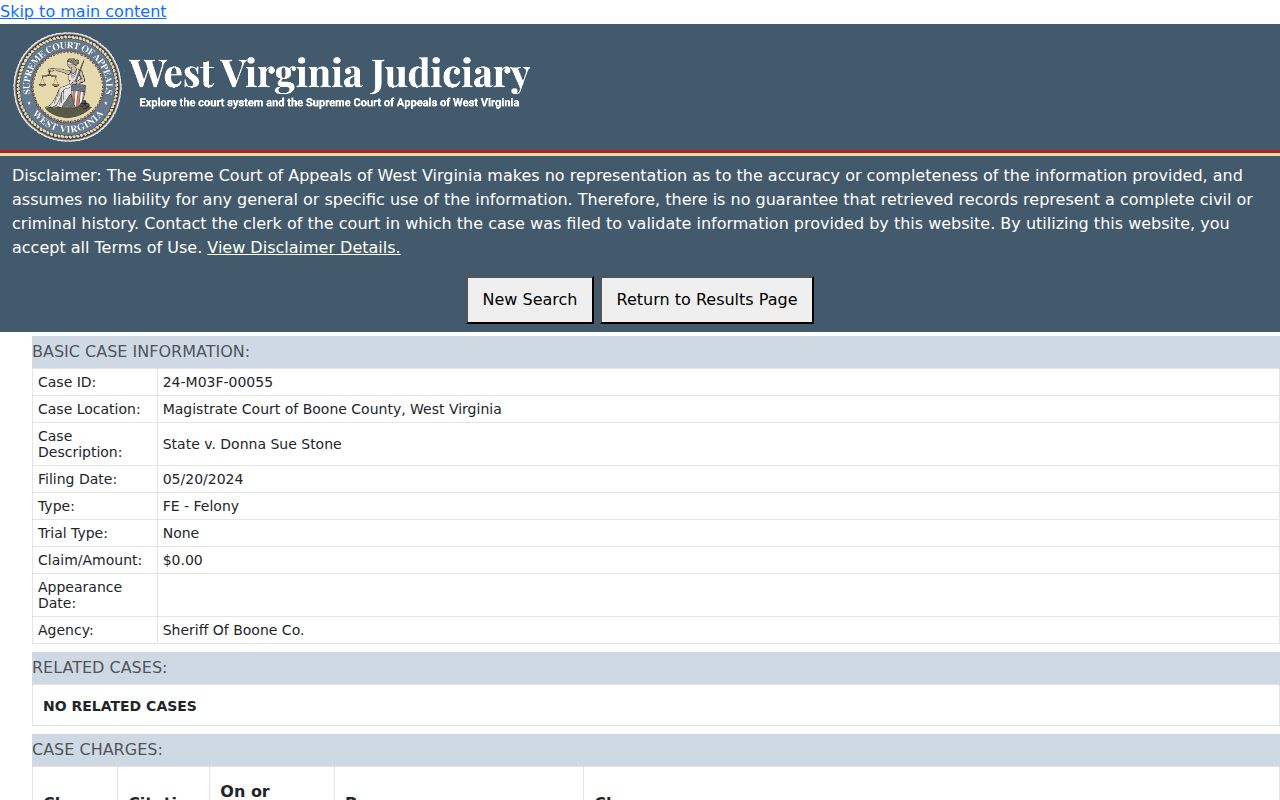
Boone County sample entries show how the codes work in practice. MFFCF marks a felony complaint. MMWAR means a warrant was issued. MBOND marks bond or bail set, and MBONI marks it posted. MGNCH is a notice of hearing, and MMOJR is an order for jail release. Each code records a separate event in time. A warrant row proves no arrest by itself. Bond set and bond posted are different steps, and an old bond row says nothing about custody today. “Hearing/Event Closed” closes the scheduled event, not necessarily the whole case. Ask the magistrate clerk when an entry stays unclear. The clerk can provide the public document or a neutral explanation of the record label.
Criminal Case Stages on the Docket
Sequence varies with the charge and the court. Most Boone County criminal dockets still tell a familiar story: a filing, an initial appearance or arraignment, pretrial events, then a plea or trial, then the result. A felony adds a magistrate preliminary examination and a later circuit indictment. Extra rows are common. Motions, bond changes, notices, transport orders, and continuances can all add rows. None of them changes the final outcome.
Docket flow: Complaint or Charge › Initial Appearance › Preliminary Hearing or Arraignment › Pretrial Events › Plea or Trial › Disposition and Sentencing
Read forward to the latest dated entry. Then check whether a later court number exists. One indictment or information per defendant can carry multiple counts, so count rows are not separate people or separate convictions.
Boone County Criminal Results Differ
Careful reading keeps a docket honest. A charge is only an allegation. A plea is a response, and a disposition is the recorded result of a charge or case. A sentence or non-monetary condition may sit in another section, and blending these labels into one claim badly misstates what Boone County court records show.
- Charge
- The offense alleged in a complaint, citation, indictment, or information.
- Plea
- The defendant's recorded response where the rules and docket provide it.
- Disposition
- The result or status entered by the court, including dismissal or conviction where applicable.
- Docket entry
- A dated row naming a filing, notice, order, or other court action.
Quote the field and its date. Precision beats paraphrase. Never infer an outcome from a filing title, and never treat a motion as granted unless an order or disposition confirms it.
Boone County Criminal Docket Courts
Two courts split the criminal docket work in Boone County. Magistrate Court takes warrants, misdemeanors, traffic cases, and preliminary examinations in felony matters. Anything else state law assigns it lands there too. To search those records, use MCR, or check an exact citation through MFP if you have a payment identifier. Elizabeth Summers serves as the magistrate clerk. Her office takes calls at 304-369-7366. Circuit Court sits above it as the general-jurisdiction court of record in the Ninth Judicial Circuit. Every felony charge runs through Circuit Court, along with certain misdemeanors and appeals from the magistrate and municipal benches. Samuel R. Burns holds the Circuit Clerk post at 200 State Street, Suite 202, Madison, WV 25130. The office is reachable at 304-369-7320. One caution applies to docket search habits. Municipal ordinance cases live with the municipality itself. Federal charges belong to the Southern District of West Virginia, not either state portal.
Getting a Boone County Criminal File Copy
MCR keeps document images off the internet entirely. So once a Boone County case turns up in the docket, a phone call or visit to the magistrate clerk gets things moving; have the case ID ready, describe the item you want, and give a tight date range. Circuit cases work differently. WVPASS may allow a public download of nonsealed filings, or the circuit clerk can arrange an inspection or a copy request, since state law permits both within other legal limits. Before anything gets reproduced, ask the clerk what a plain copy costs versus a certified one. Circuit clerk fees come from West Virginia Code §59-1-11. Magistrate copies run under separate administrative rules. Don't confuse an online download charge or a clerk copy charge with criminal court costs. They are three different fees. CourtPLUS, meanwhile, is an e-filing service for registered circuit and family users rather than a free substitute for public docket search.
Boone County court contacts
Circuit Clerk: 200 State Street, Suite 202, Madison, WV 25130; 304-369-7320.
Magistrate Clerk: Boone County Magistrate Court; 304-369-7366.
Access Rules for Criminal Dockets
Access to a Boone County court docket is broad, though never absolute. West Virginia law opens court papers to inspection unless some other statute steps in. Trial Court Rule 10.03 demands that any access-limiting order spell out its nature, duration, and reason. The electronic rules mirror that limit by excluding sealed and confidential documents. WVPASS publishes neither sealed filings nor juvenile matters.
Key rules:
West Virginia Code §51-4-2 provides public inspection and clerk copies unless another law provides otherwise.
West Virginia Code §49-5-103 protects juvenile records and limits disclosure.
West Virginia Code §61-11-25 limits inspection after qualifying sealing or expungement orders.
A blank search result is not proof that no case ever existed. The record may fall outside the portal's date range, sit under a different court number, or be confidential, sealed, expunged, or held only in paper at the clerk's office. If access gets limited, ask for the legal basis. Also ask whether a redacted public copy exists.
Privacy in Boone County Criminal Docket Research
Public access to a Boone County criminal docket does not license broad republication. Party sections list names and roles. Filings can expose victim, witness, medical, financial, or other protected details. Use court records to confirm a case event or understand how the court handled it. Copy only what you need. Juvenile identities and sealed material should never be chased through cached or mirror copies. Aggregate numbers tell a different story than an individual docket does. The 2025 annual report can describe overall Boone County workload. It proves nothing about any one person. That year, Boone logged 111 circuit felony filings and 1,294 magistrate criminal filings. Both figures count filings, not convictions. The larger magistrate number simply reflects a different court level and case mix. A near-real-time dashboard tracks active preliminary counts. Keep it apart from finalized annual totals.